An Old Photo
One afternoon, my mom and I were cleaning drawers and reorganizing shelves, deciding what to keep and what to let go. It was an ordinary day, the kind that usually disappears as soon as it ends, until we found an old wooden box with a black and white photograph inside.
It caught my attention immediately. There was something about it, quiet and almost magnetic. I held it in my hands for a moment before really looking at it, noticing the slight bend at the corners and the softness of the paper from time. Then I saw her, a young woman standing with the softest, most gentle smile, looking directly at the camera. She wore a long winter coat, beautifully tailored, her hair styled with care, and everything about her felt composed and intentional.
“Who is this?” I asked. My mom paused when she saw the photo. “That is your great-grandmother,” she said. “Your grandfather’s mother. It is the only photo we have of her.”
The only one. I remember holding it more carefully after that, no longer just admiring a beautiful stranger but searching for something deeper, a connection, a trace of myself in her face. I had never heard much about my great-grandmother before, so I asked my mom to tell me everything she knew about that side of the family. As she spoke, it felt like a hidden world slowly unfolding. I had never felt history so personally before.
My great-grandmother lived what could be described as a good life, but a very short one. She married young and had ten children. She and my great-grandfather were building a large and lively family in a time when life was far from easy. Before that life could fully unfold, it ended when cancer took her away. My mom said, in a quiet and matter of fact way, that in some sense my great-grandmother was lucky. She passed before the Cultural Revolution, a period of deep turmoil in China when lives were turned upside down.
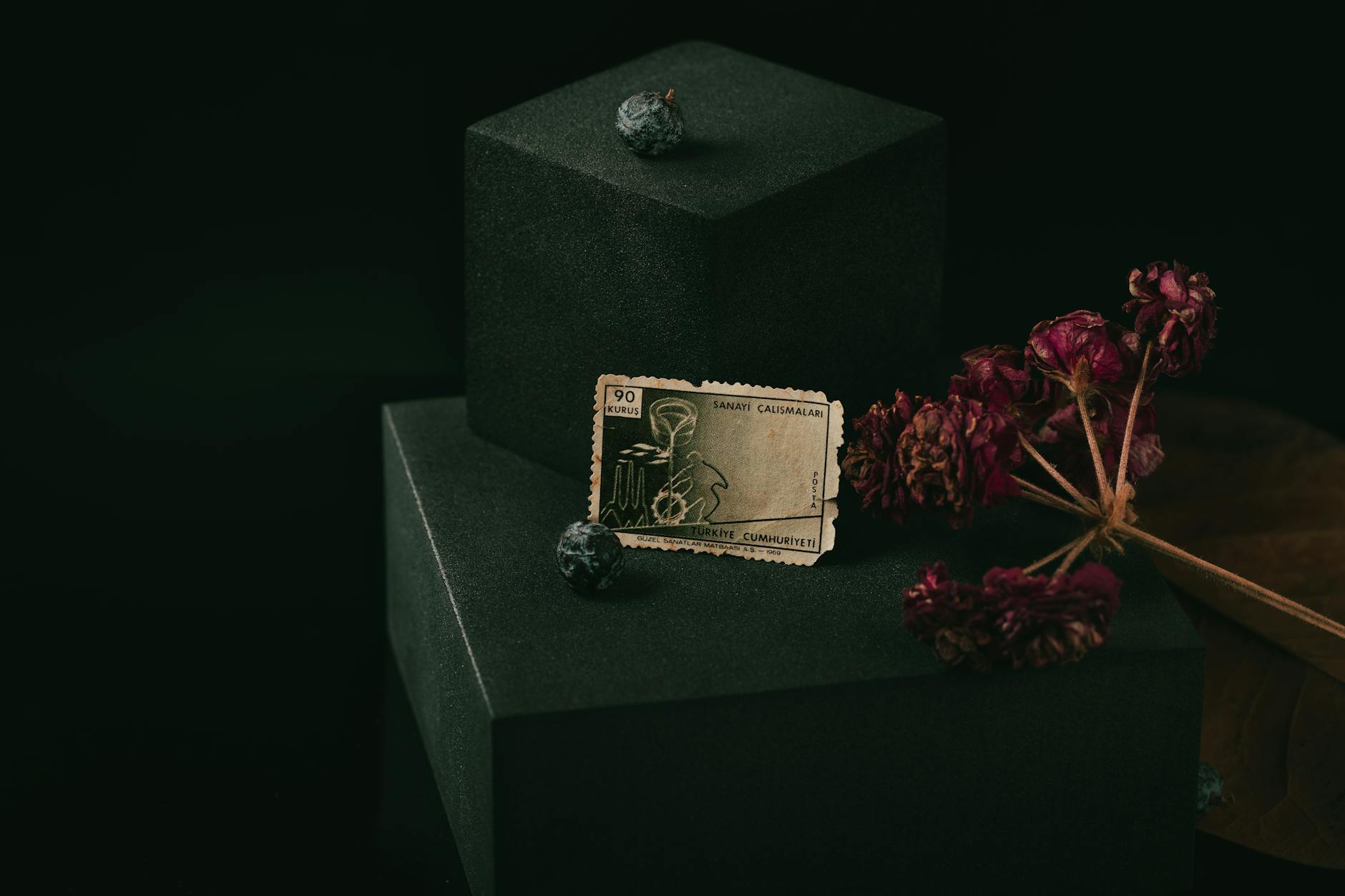
My great-grandfather was a successful businessman, hardworking and driven. He built a two story house for his family, something incredibly rare at the time. That house must have once felt stable and full, holding ten children and a lifetime within its walls. He also had a serious passion for stamp collecting and was known for it. He once owned one of the rarest pieces in the world, the Penny Black, the world’s first adhesive postage stamp used in a public postal system.
During the Cultural Revolution, those who were once respected or successful were suddenly labeled as bad people simply because they had wealth or education. My great-grandfather was one of those people. Everything was taken from him, the house, the possessions, the collections. Pieces of a life he carefully built were erased almost overnight.
My grandfather, my mom’s father, had dreamed of attending Tsinghua University, one of the most prestigious universities in China, often compared to Harvard. He was accepted, but because of his family background, he was not allowed to attend. Instead, he was reassigned to a different college far from home, one he had not applied for. Although he and my grandmother had met before, it was at that university, where they were both sent for the same reason, that they fell in love. They built a life together, and eventually had my mom.
It is strange how life works like that, how something that feels unfair, even devastating, can quietly redirect everything. Despite how my grandfather and his family were treated, he spent his life working for the government, contributing in the only way he could. It feels like a kind of resilience that is not dramatic or loud, but steady and enduring.
By the time my mom finished telling me all of this, the photo in my hand felt heavier, not physically but in meaning. It was no longer just an image. It was an entry point into a history I had never fully considered. It was a reminder that the life I live now is built on stories I did not witness, sacrifices I did not make, and paths I did not have to walk. For a long time, it felt like distant history, something I could listen to and even be fascinated by, but not fully feel. Holding that photograph, I realized how close it actually is.
I live in a world where I do not have to think about whether my family background will limit my future, where stability is something I quietly assume, where opportunity feels normal. My grandfather and his family did not live in that kind of world. That difference is the reason I am here. If my great-grandmother had lived longer, if my grandfather had gone to the university he dreamed of, if history had unfolded even slightly differently, I probably would not exist.
One day, I hope to visit the city where my grandparents grew up, to walk the streets they once knew, to see what remains and imagine what does not. It is at the very top of my bucket list, not because I am searching for something specific, but because I want to feel closer to a story that, until now, has only existed in fragments.
For now, I have this photograph, a young woman smiling softly at the camera, unaware that she would become a memory, a story, a beginning. Somehow that feels like enough, because it reminds me quietly but powerfully to appreciate what I have, to recognize how I got here, and to never take any of it for granted.
 Olivia Jordan
Leave a comment