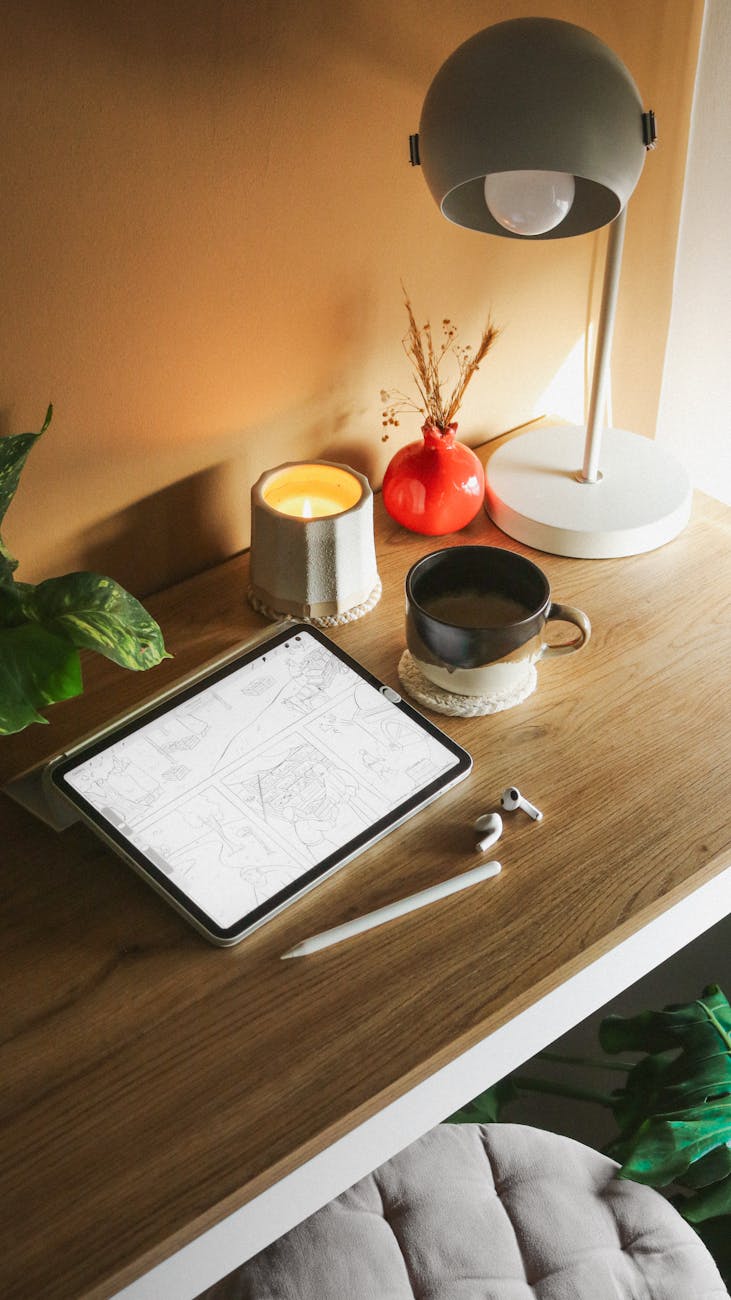
Where Art Meets Technology: Digital Art
I have always loved drawing and painting by hand. There is something grounding about pencil on paper, the slight resistance of the surface, and the gradual building of color through layers. Traditional art feels physical and immediate. Every mark matters. Every decision leaves a trace.
Recently, I have been exploring digital art more deeply. At first, it felt unfamiliar. Instead of paper, there was a screen. Instead of physical paint, there were layers and brushes that existed only in software. But the more I experimented, the more I realized that digital art is not separate from traditional art. It grows from the same foundations: observation, composition, color, and intention.
Both traditional and digital art require careful thinking about balance, contrast, proportion, and form. Whether I am shading with graphite or adjusting opacity on a screen, I am still deciding where light falls, how shapes relate, and how colors interact. The principles remain constant even if the tools change.
At the same time, the differences are significant. In traditional work, mistakes can become part of the piece. They cannot always be erased completely. That limitation teaches patience and commitment. In digital work, I can undo instantly, duplicate layers, test bold color combinations, and explore multiple versions of the same idea without starting over. The flexibility encourages experimentation. I feel freer to take risks because nothing is permanently lost.
Digital art also changes how I think about structure. Moving elements across a screen allows me to study alignment and spacing with precision. I can zoom in to examine small details, then zoom out to evaluate the whole composition. This constant shift between detail and overview sharpens my awareness of how individual parts contribute to a unified image.
What excites me most is not choosing between traditional and digital art, but understanding how they inform each other. Drawing by hand strengthens my sense of proportion and line control. Digital work strengthens my understanding of composition, layering, and visual systems. Together, they expand how I see and create.
Exploring digital art feels like stepping into a new studio with different tools but the same curiosity. It challenges me to think differently, to test ideas quickly, and to refine them with intention. The screen may replace paper, but the core remains the same: observation, imagination, and the desire to turn an idea into something visible.
I am still at the beginning of this exploration, but each digital study teaches me something about color, form, and possibility. Where art meets technology is not just a trend. For me, it is an evolving space of learning, experimentation, and creative growth.
 Olivia Jordan
Leave a comment